
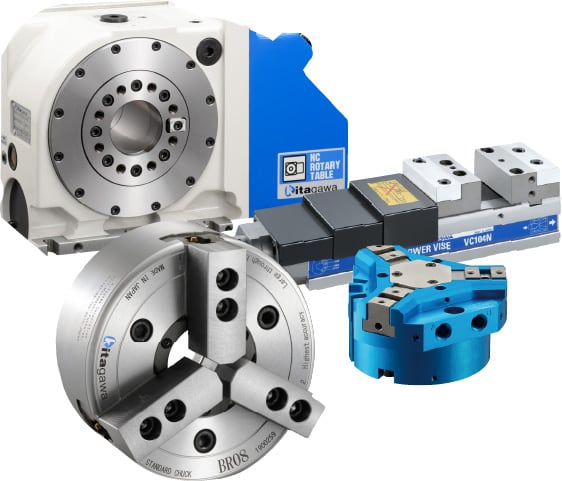
How a century of Japanese manufacturing shaped the global standard for power chucks and rotary tables
Some manufacturing companies grow by specialising in a single breakthrough technology. Others evolve more gradually, building expertise across multiple disciplines before their innovations reshape an industry.
That second story belongs to Kitagawa Corporation, a company whose origins stretch back more than a century to Hiroshima, Japan. Today the name Kitagawa is synonymous with high-precision power chucks and NC rotary tables, products that have become essential components of modern CNC machining. But the path to that position began long before CNC machines existed.
A company born alongside modern manufacturing
Kitagawa was founded in 1918 during a period when Japan was rapidly industrialising and expanding its manufacturing capabilities. The company’s early focus was on metal processing and casting technologies, helping supply materials and components for a wide range of industries.
From the beginning, the company developed expertise in working with metals — not only casting them but also machining and refining them into high-precision components.
That integrated understanding of materials and machining would eventually become one of Kitagawa’s greatest strengths.
Today the company operates across three major areas:
While these activities may appear diverse, they share a common foundation: engineering precision and the ability to manufacture robust mechanical systems at scale.

Entering the world of workholding
Kitagawa’s move into machine tool accessories began in 1937, when the company started developing workholding solutions for the growing machining sector.
At the time, manufacturing was undergoing a major transformation. Machine tools were becoming faster and more capable, but traditional clamping methods were struggling to keep pace with the productivity demands of modern production.
Recognising the opportunity, Kitagawa began developing its own workholding technologies.
The defining moment came in 1967, when the company introduced its first power chuck — a product that would become one of the most widely used clamping systems in CNC turning.
The power chuck becomes an industry standard
Power chucks revolutionised turning operations by replacing manual clamping with hydraulic or pneumatic actuation. This allowed components to be clamped quickly, consistently and with much greater force.
For manufacturers running high-volume production — particularly in the automotive sector — the benefits were immediate.
Faster loading times, improved repeatability and greater clamping stability meant that machines could run faster and more reliably.
Over time, Kitagawa refined the design of its chucks to achieve greater rigidity, durability and precision. These developments helped establish the company as one of the most trusted workholding manufacturers in the global machine tool industry.
Today Kitagawa power chucks are widely recognised for their longevity, often operating in demanding 24/7 production environments for decades before requiring refurbishment.
In Japan alone, the company accounts for roughly 60 percent of the domestic power chuck market, reflecting the scale of its influence.
Expanding the capabilities of machining centres
As machining technology evolved through the CNC revolution of the 1970s and 1980s, Kitagawa expanded its product portfolio to support new machining strategies.
One of the most significant developments was the introduction of NC rotary tables for machining centres.
These systems allow components to be indexed or rotated automatically, effectively adding a fourth or fifth axis of movement to a machine tool. This capability dramatically reduces the number of setups required to machine complex parts.
Kitagawa’s rotary tables became known for their rigidity, high clamping force and reliability, making them particularly well suited to demanding applications in the automotive and aerospace sectors.
The company also developed specialised drive mechanisms, including roller gear cam systems, which deliver extremely high positioning accuracy with virtually zero backlash.
Global expansion
As the reputation of its machine tool accessories grew, Kitagawa began expanding internationally.
In 1982 the company established Kitagawa Europe Ltd, creating a dedicated presence to support customers across Europe, the Middle East, India and Africa.
Further expansion followed in the decades that followed, including operations in Asia and North America.
A significant step in strengthening the company’s North American presence came with the creation of Kitagawa NorthTech, based in Schaumburg, Illinois. The facility was established to provide engineering support, application development and local service for manufacturers throughout the United States.
In 2008 Kitagawa India Pvt Ltd was established initially as a key sales and service base but then expanding to manufacture for the Indian market.
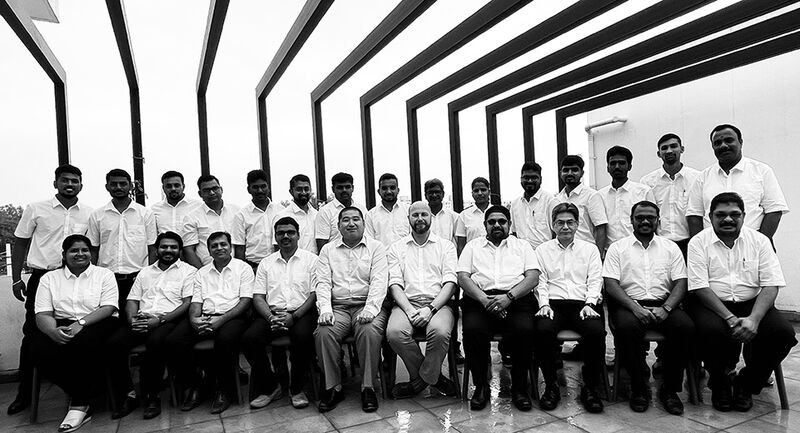
By combining global manufacturing with regional technical expertise, Kitagawa has been able to support complex machining operations worldwide.
Engineering solutions rather than just products
One of the defining characteristics of Kitagawa’s approach is that it rarely treats workholding as a standalone component.
Instead, the company focuses on developing complete machining solutions.
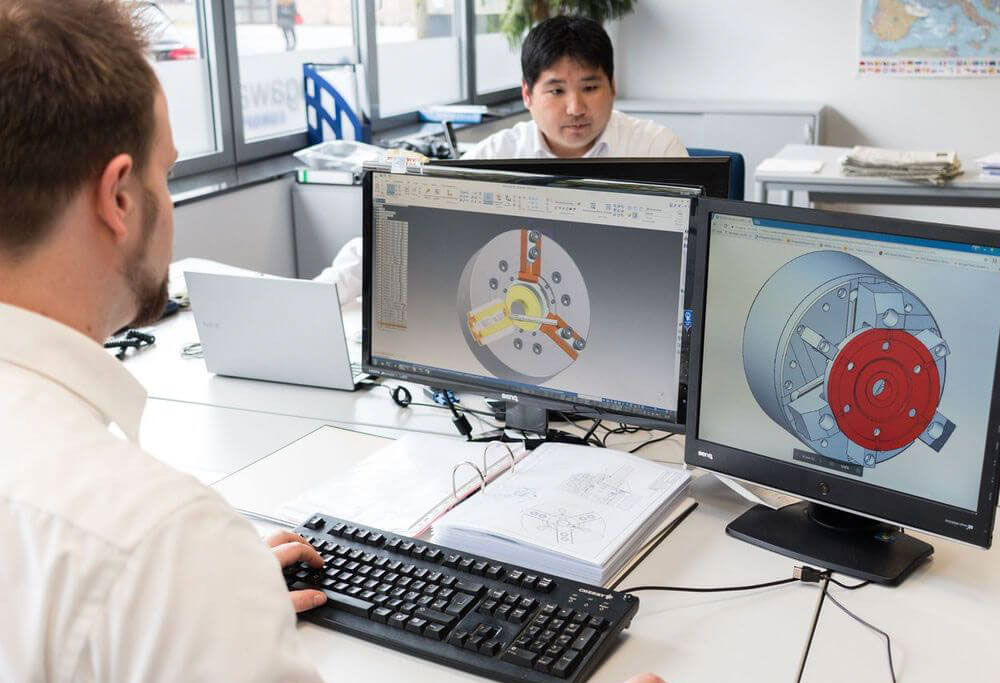
Its engineering teams regularly work with customers to design entire clamping strategies for production lines, selecting combinations of chucks, cylinders and rotary tables that optimise the machining process.
This systems-level thinking is particularly important in automated manufacturing environments, where machines may run unattended for extended periods.
Reliable workholding becomes critical when factories are operating with lights-out machining, robotic loading and extremely tight tolerances.
Built on a philosophy of manufacturing excellence
Underlying all of Kitagawa’s activities is a philosophy deeply rooted in Japanese manufacturing culture.
The company emphasises four guiding values:

These principles reflect the broader concept of monozukuri — the Japanese dedication to craftsmanship, quality and constant improvement in manufacturing.
That mindset helps explain why many Kitagawa products remain in service for decades and why the company continues to invest heavily in research and development.
A century of engineering evolution
In 2018, as it celebrated its 100th anniversary, the company updated its global identity from Kitagawa Iron Works to Kitagawa Corporation, reflecting its broader international presence and diversified engineering capabilities.
Today the organisation operates through several specialised divisions, including:
Together these divisions reflect the breadth of engineering expertise built over more than a century.
Kitagawa and modern machining
In modern machine shops, workholding is often the unsung hero of productivity. Precision chucks and rotary tables quietly enable the accuracy, repeatability and automation that high-volume manufacturing demands.
Kitagawa’s contribution to that capability is significant.
From the development of the first power chucks to the latest high-precision rotary tables designed for automated machining systems, the company has played a central role in shaping how parts are held, positioned and machined around the world.
And like many enduring engineering companies, its story began with a simple objective: helping manufacturers produce better components more efficiently.
Sometimes the most important innovations in machining are not the machines themselves — but the systems that hold everything firmly in place.

