Engineering and manufacturing remain two of the most rewarding and economically vital and among the most fulfilling careers in the UK—offering a blend of creativity, technical challenge, problem-solving, innovation and the satisfaction of producing tangible, real-world results that improve society.
Supported by insights from organisations such as Renishaw, Association of the British Pharmaceutical Industry (ABPI), and labour-market commentators like Randstad and Indeed—this white paper explores why these sectors consistently deliver exceptional career satisfaction, long-term stability, and compelling opportunities for growth.
To bring these insights closer to home, the paper also features views from 1st MTA colleagues, demonstrating the real human motivations that drive long and rewarding careers in engineering and manufacturing.
Engineering and manufacturing careers are consistently rated as highly satisfying because they provide clear, visible results and the chance to solve real-world problems as well as offering the rare chance to take ideas from concept to reality.
Seeing Your Work in Action

Unlike purely abstract roles, engineers and manufacturing professionals can physically see, test, and hold the outcomes of their work—whether that’s medical devices, aerospace components, automotive systems, digital manufacturing technologies or fully finished products.
“I find that having even a tiny role in keeping people’s lights on is rewarding enough.” — Engineer, UK Power Sector (Reddit)
“There is something to show for a hard day’s work. You make a difference.”
— Steve Ellicott, Technical Sales Manager, 1st MTA
Solving Real Problems
Engineers thrive on complex challenges – from designing safer, greener homes to enabling breakthroughs in precision medicine and robotics. Problem-solving sits at the heart of engineering. Whether improving efficiency, enhancing safety, or designing entirely new solutions, the work has a direct and often essential impact on everyday life.
“I love working out how things work, problem-solving, and working with people.” — bridget.imanengineer.org.uk
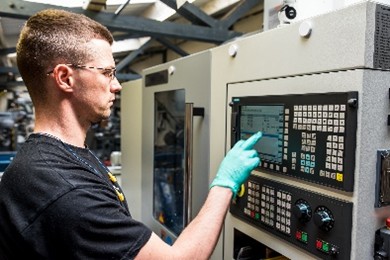
Engineering is fundamentally a “creative science” blending artistic imagination with scientific rigour – “creative logic” in action.
Creativity Meets Logic
As noted by Renishaw, engineers use both sides of the brain: imaginative thinking and analytical problem-solving.
Fast-Moving, Ever-Evolving – Innovation Every Day
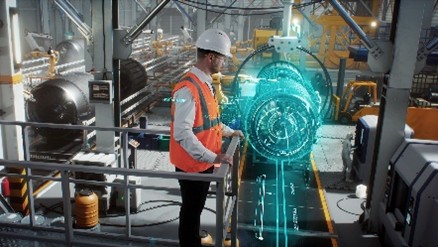
Advances in robotics, AI, automation, additive manufacturing and sustainable technologies ensure continuous evolution and learning – no two days look the same.
“When you stop learning, it stops being fun.” — Medium interview with UK engineer
This dynamism fosters a lifelong learning mindset – one of the strongest contributors to long-term career satisfaction.
“There is always something new to design, learn and apply. That keeps everything fresh and exciting.”
— Catherine Kelly, General Manager, 1st MTA
“As an engineer you never stop learning—new processes, new products, new methodologies.”
— Steve Ellicott, 1st MTA
High and Increasing Demand
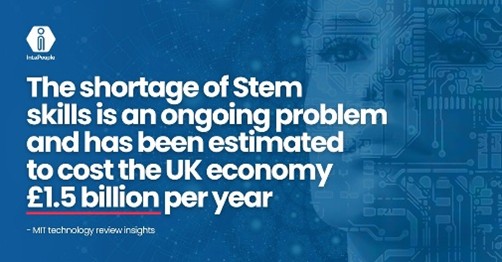
The UK faces a sustained skills shortage. Current estimates indicate the country must at least double its number of engineering apprentices and graduates to maintain growth.
Job Security and Transferable Skills
According to the Association of the British Pharmaceutical Industry (ABPI), engineering talent is valued across industries—pharma, aerospace, energy, manufacturing, food production, and more.
Strong Salaries
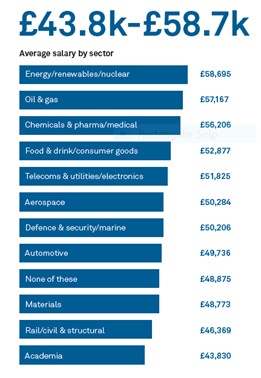
Engineering graduates earn 20% above the average UK graduate starting salary, with higher lifetime earnings than most disciplines.
Clear Pathways to Leadership
Whether progressing into technical specialisms or management, the sector offers structured and diverse advancement routes.
Engineering is not solitary – it is a deeply collaborative profession.
Shared Expertise & Collective Success
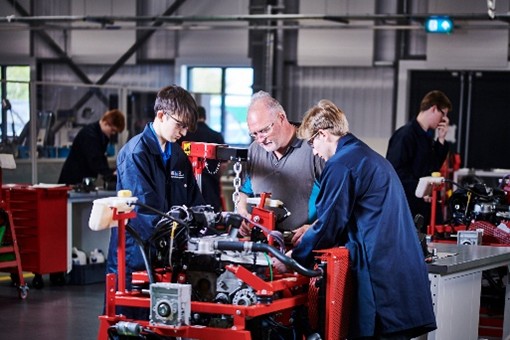
Teams work together across design, machining, quality assurance, R&D, and systems engineers collaborate daily across multidisciplinary teams. Communication, knowledge-sharing, and joint problem-solving are core to success.
As Renishaw observes:
“Teamwork is a key ingredient of a successful career in engineering—working with the smartest and most interesting of like-minded professionals.”
Supportive, High-Skill Environments
Manufacturing floors and engineering offices foster strong camaraderie, with clear communication and shared purpose at the core.
“It’s still very much a face-to-face industry where people at all levels work together to achieve common goals.”
— Roy Wyatt, Technical Manager, 1st MTA
“Competition in this sector is friendly and supportive—people genuinely celebrate each other’s innovations.”
— Catherine Kelly, 1st MTA
Engineering is truly global – it is not restricted to one place or one type of organisation.
Cross-Industry Mobility
Skills transfer seamlessly across:
International Reach
Engineering industries span Europe, Asia and the Americas. Work may involve global suppliers, overseas facilities, international customers, and travel.
“I enjoy supporting customers the length and breadth of the country—many become long-distance friends.”
— Steve Ellicott, 1st MTA
Engineering as “Magic”
A widely shared sentiment among UK engineers:
“Engineering is the closest thing to magic that exists in the world.” — www.accu.co.uk
Purpose, Autonomy & Impact
Engineers consistently cite the following as their greatest motivators:
These intrinsic factors are strongly linked to long-term well-being, as supported by findings from PositivePsychology.com and University of Liverpool.
Roy Wyatt — Technical Manager, 1st MTA
“I like a challenge. It’s rewarding to use a lifetime of skills to create workholding solutions that result in happy customers.”
“I get real satisfaction from solving complex problems and finding the correct solution.”
Roy also highlights how much he values educating colleagues and customers about the capabilities and adaptability of 1st MTA products and services.
I enjoy enabling and educating both colleagues and customers about capabilities and adaptability of products and services.
Karen Cavill — Quality Manager, 1st MTA
“I like seeing a job through from start to finish. Customer satisfaction gives me job satisfaction.”
“Working closely with customers to achieve their required outcomes is incredibly rewarding.”
“Maintaining and improving ISO standards enhances relationships and demonstrates our commitment to quality.”
Karen’s perspective underscores how engineering allows individuals to combine technical rigour with strong customer partnerships.
Chris Tanner — Systems Coordinator, 1st MTA
“I enjoy developing and improving internal systems to benefit colleagues, customers, and suppliers.”
Chris highlights the behind-the-scenes engineering work that strengthens operational efficiency and empowers others.
Catherine Kelly — General Manager, 1st MTA
“It’s a great industry to work in—cutting-edge but not cut-throat.”
“I see every day just how rewarding and meaningful a career in engineering and manufacturing can be. Our industry is built of ingenuity, collaboration and the satisfaction of creating real solutions that make a difference.”
“What makes this sector truly special is the people – skilled, curious, ingenious, generous with their knowledge and united by a shared commitment to solving problems and advancing what’s possible.”
“If you value challenge, creativity and being part of a community that genuinely takes pride in its work, there is no better place to build a fulfilling and future-proof career. After nearly 30 years, I wouldn’t be anywhere else.”
Catherine captures the heart of what makes engineering and manufacturing such rewarding fields. Her emphasis on innovation, collaboration and the strength of the people with in the sector highlights why so many professionals build lifelong careers in an industry that offers not only technical challenge and creativity, but also a genuinely supportive and fulfilling community.
Steve Ellicott — Technical Sales Manager, 1st MTA
“I like making and designing things—actually producing product.”
“There is something tangible to show for a hard day’s work.”
“Helping people solve problems is extremely satisfying.”
“You never stop learning as an engineer.”
Steve’s comments reflect the hands-on satisfaction, relationship-building, and continuous personal growth engineers experience.
Research from organisations such as PositivePsychology.com, University of Liverpool, and market commentators like WeAreTheCity shows that job satisfaction affects:
Salary contributes to security, but beyond basic needs, intrinsic motivation—purpose, challenge, autonomy, culture—is the real driver of long-term fulfilment. Once financial needs are met, salary has diminishing impact on happiness.
Engineering provides the rare combination of strong pay and deep intrinsic satisfaction.
According to Randstad, manufacturing engineers consistently report above-average job satisfaction due to:
Indeed and industry publication Manufacturing Today confirm similar trends across UK and global markets.
The UK excels in:
Companies like Renishaw, Rolls-Royce, BAE Systems, and hundreds of specialist SMEs maintain the country’s world-class reputation.
As one of Gloucestershire’s largest private-sector employers, Renishaw employs hundreds of engineers – offering a clear symbol of the sector’s strength and opportunity.
Engineering and manufacturing careers offer a unique blend of:
As the voices of 1st MTA colleagues demonstrate, these careers are not only technically exciting—they are human, rewarding, relationship-driven, and packed with purpose.
For young people entering the field—or professionals considering career development—these industries provide some of the most fulfilling, future-proof opportunities in the UK.
“You might be building medical devices, renewable energy systems, or next-generation aerospace components. The opportunities to make a positive difference are endless.” — Renishaw
After decades of rapid innovation and with major national skills shortages, there has never been a better time to enter or progress within the engineering and manufacturing sectors.